
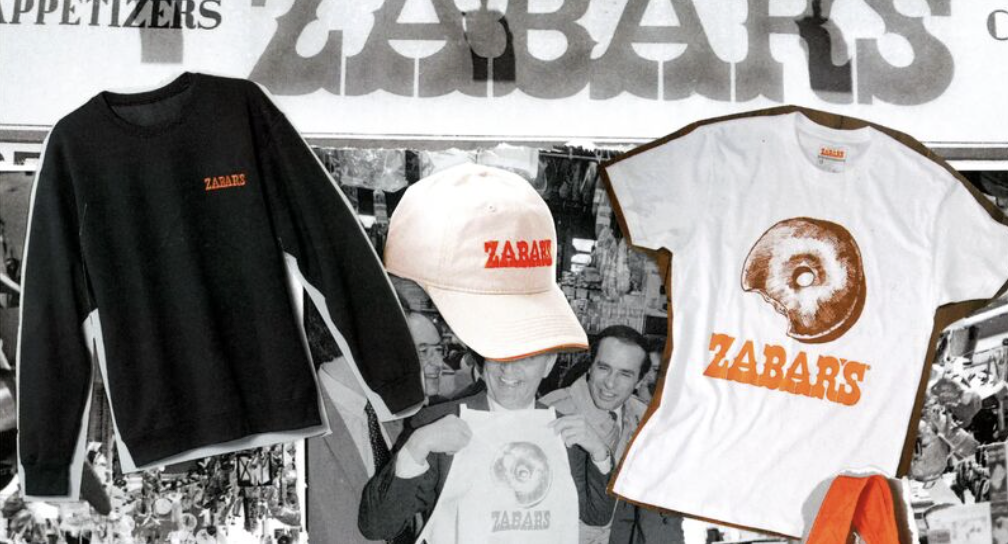
By Amanda Hofman, Chief Swag Officer and Branded Merchandise Expert
Why Zabar’s Merch Works (Without Even Trying)
Zabar’s merch isn’t trying hard.
And in this case, that’s exactly why it works.
(For my non-NYC friends: Zabar’s is a legendary Upper West Side grocery store where the grannies are fierce, the vibes are intense, and the smoked fish is basically a religion.)
In a world where branded merchandise is often overdesigned, overthought, and chasing the latest trend cycle, Zabar’s does the opposite—and wins.
Zabar’s Branded Merchandise Isn’t Gimmicky
Zabar’s merch isn’t gimmicky.
It’s not trend-driven.
It’s not reinventing itself every season.
The iconic orange tote is still the orange tote. Same look. Same logo. Same energy.
So why does it resonate so deeply with New Yorkers and tourists?
Because the branded merchandise isn’t trying to manufacture meaning. It’s simply preserving and highlighting something people already feel connected to.
When the Brand Relationship Does the Heavy Lifting
This is the part many brands miss when they think about promotional products.
At Zabar’s, the merch isn’t doing the heavy lifting—the brand relationship is.
The tote doesn’t exist to convince you to care about Zabar’s. You already care. The branded merchandise simply gives you a way to celebrate that connection and carry it with you.
That’s the difference between forgettable swag and meaningful branded merchandise.
The Real Goal of Branded Merch Isn’t Always Sales
The goal isn’t always to sell merch.
Sometimes, the goal of branded merchandise is to honor a bond that already exists—to create a signal of belonging.
When merch becomes a marker of identity, people wear it to say:
“This is part of who I am.”
Not:
“This is something I bought.”
That shift—from transaction to identity—is what makes certain promotional products iconic.
What Brands Can Learn From Zabar’s Tote
Zabar’s proves that effective branded merchandise doesn’t always need:
- Constant redesigns
- Trend hopping
- Clever gimmicks
What it does need is authenticity, consistency, and a real emotional connection to the brand.
When your merch reflects something people already love, it stops feeling like marketing and starts feeling like culture.