By Amanda Hofman, Chief Swag Officer and Branded Merchandise Expert
There’s a question I hear all the time when teams are choosing branded merchandise:
“Is it useful?”
It’s a fair question. But it’s not the right one.
When usefulness becomes the main (or only) metric for evaluating branded merch, brands end up playing it safe—and safe is exactly how you end up with forgettable promotional products.
The Better Question to Ask About Branded Merch
Instead of asking whether an item is useful, ask this:
Does this branded merchandise strengthen the relationship between my brand and my people?
That shift changes everything.
Because here’s where things get muddy: Pens are useful. Notepads are useful. Flashlights are useful.
And yes, no one wants their branded merchandise to go straight into the trash. So “useful” starts to feel like the obvious answer.
Why “Useful” Isn’t Enough for Promotional Products
To be clear, useful items do tend to stick around longer than novelty swag. That part is true. But longevity alone isn’t the goal of effective branded merchandise.
If usefulness were enough, every brand would win just by ordering the same pens, totes, and mugs as everyone else.
But branded merch isn’t just about staying on a desk—it’s about staying relevant.
What Great Branded Merchandise Actually Does
Strong branded merchandise creates connection.
Useful keeps an item nearby
Meaningful makes people choose it, value it, and keep it close over time
The best promotional products reflect your brand’s values, personality, and intention. They feel considered. They make people think, “This brand gets me.”
And when that happens, your merch stops being a giveaway and starts being a relationship builder.
The Takeaway
If your only goal is usefulness, you’ll blend in. If your goal is connection, you’ll stand out.
When you’re evaluating branded merchandise ideas, don’t stop at “Will this be used?” Ask whether it actually deepens the relationship between your brand and the people who matter most.
Because in the long run, meaningful branded merch always outperforms merely useful swag.
By Amanda Hofman, Chief Swag Officer and Branded Merchandise Expert
Order in the court. Today’s case is one we’ve all seen before—lurking in desk drawers, trade show totes, and onboarding kits everywhere.
🚨 The Crime
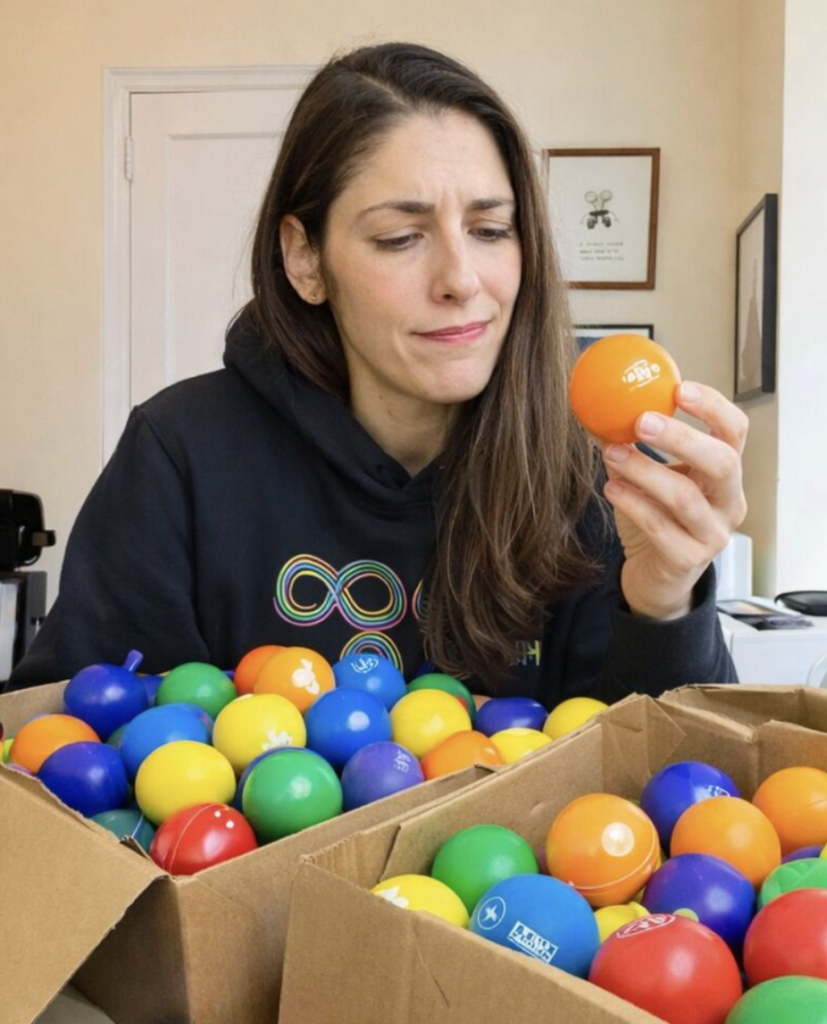
Branded stress balls. Yes. Still.
And let’s be precise here. The classic foam stress balls? Absolute trash. The squishy gel ones? Marginally more satisfying, but still… trash. Neither deserves a place in a modern branded merchandise strategy.
🔎 The Evidence
Exhibit A: a logo-stamped orb that lives exactly one of three very predictable lives:
It explodes inside a desk drawer
It becomes mysteriously sticky (no one knows how or why)
It’s thrown away within 48 hours
This is not brand longevity. This is a speed run to the landfill.
➕ Bonus Offense
Branded stress balls have zero meaningful connection to your brand story, your values, or the actual lived experience of the people you’re trying to impress. Calling them “wellness swag” doesn’t magically make them thoughtful, useful, or memorable.
⚖️ The Verdict
Guilty. Of pretending to be wellness, wasting branded merchandise budgets, and contributing to unnecessary promo waste.
🔥 The Sentence
You must personally explain to every single recipient why this was the best possible use of budget, creativity, and resources. (Good luck.)
The Bigger Problem with Cheap Promotional Products
Here’s the hard truth: stress balls don’t reduce stress. They just remind people you didn’t try.
In a world where branded merchandise is supposed to build brand affinity, create emotional connection, and extend your brand beyond the moment—stress balls fail on every count. They’re forgettable, disposable, and completely interchangeable with every other company that ordered promo products in a rush.
And if your branded swag doesn’t reflect intention, quality, or relevance, it’s not marketing—it’s clutter.
The Appeal: Better Branded Merchandise Choices Exist
Thoughtful branded merchandise should:
Be useful or delightful (ideally both)
Reflect your brand values
Last longer than a couple of days
Make people think, “Oh, this is actually good”
If your swag can’t do that, it’s time to rethink the item—not slap a logo on something cheaper
By Amanda Hofman, Chief Swag Officer and Branded Merchandise Expert
Yes, this is real.
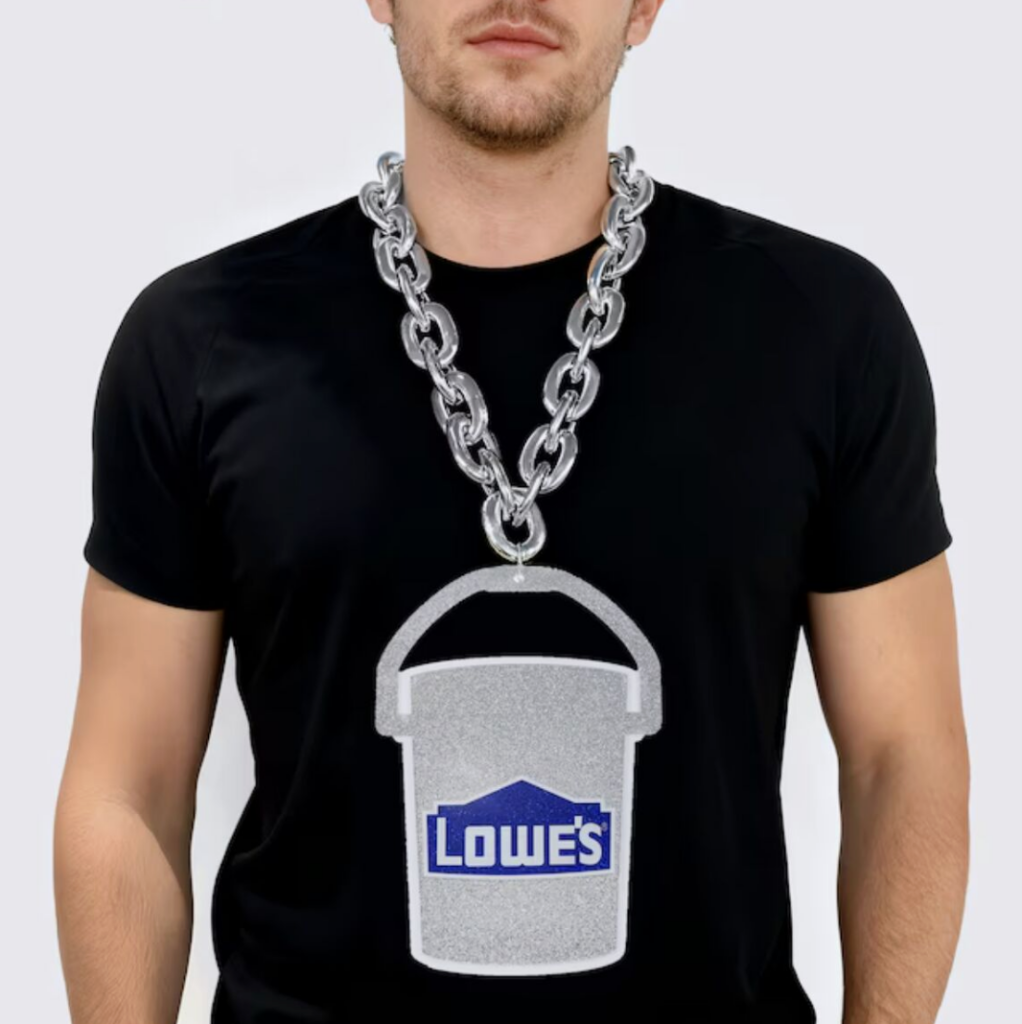
People are wearing a Lowe’s bucket… as jewelry.
A chunky silver chain with an enormous acrylic bucket pendant sold out. And honestly, of all the things to sell out, this was the thing.
Not because it’s objectively beautiful. Not because it matches anyone’s outfit (unless your outfit is “weekend chaos”). But because that blue bucket already means something.
And that’s the entire point of great branded merchandise.
The Bucket Isn’t the Product. It’s the Feeling.
If you’ve ever walked into Lowe’s for “just one thing” and left two hours later with:
a cart full of supplies
a head full of confidence
and a brand-new identity as a DIY expert
…you already understand the bucket.
That blue Lowe’s bucket represents possibility. It represents ambition. It represents overconfidence. It represents the inevitable moment you text someone, “So… do you know a good contractor?”
People aren’t wearing this necklace because it’s pretty.
They’re wearing it because it’s instantly relatable.
Why This Necklace Sold Out So Fast
This is a masterclass in branded merch strategy—because it taps into something bigger than the item itself.
The Lowe’s bucket necklace signals:
→ I’ve started ambitious home and art projects. → I’ve abandoned said projects. → And I’ve hired a pro after confidently saying, “I’ve got this.”
That’s not just a necklace. That’s a personality trait.
And that’s why it moved.
When branded merch becomes a symbol of a shared experience, it creates instant community. You don’t even need to say anything. The merch says it for you.
This Is What Great Branded Merch Actually Does
Here’s what most brands get wrong about custom company merch:
They think the goal is visibility. More logos. More placement. More volume. More giveaways.
But the real goal is connection.
Great branded merchandise elevates the shared experience around your brand.
It turns something ordinary into something people want to wear, collect, joke about, and talk about.
That bucket necklace works because it’s:
specific
iconic
emotionally loaded (in a funny way)
and instantly recognizable to the right audience
This is what wearable branded merch looks like when it’s done right. It doesn’t feel like advertising—it feels like belonging.
The “Inside Joke” Effect: The Secret to Merch People Actually Want
The best branded merchandise marketing isn’t trying to convince strangers to care.
It’s giving the people who already care a way to show it.
That’s why iconic items (like the Lowe’s bucket) turn into powerful merch moments:
They’re already baked into the customer experience
They’re tied to stories people have lived
They create “if you know, you know” energy
And that kind of merch? It doesn’t sit in a drawer.
It gets worn. Repeatedly. Loudly. Proudly.
What’s the “Bucket” in Your Brand?
Every brand has one.
That one item, phrase, moment, or experience customers instantly associate with you.
Maybe it’s not a literal bucket. Maybe it’s:
a signature product
a packaging detail
a customer ritual
a catchphrase
an inside joke your community shares
If you can identify that thing, you can build custom branded apparel and branded merch that people actually want to own.
Because the best merch doesn’t come from a catalog. It comes from culture.
When people feel good in what they’re wearing, they’ll actually wear it—which is how wearable branded merch does its job.
🎨 2) Go beyond your logo in your designs
Centered logo. Big brand name. Done.
That’s not a design strategy—that’s a label maker.
The most effective branded merchandise is design-forward. It reflects your brand vibe, values, and culture in a way that feels fresh.
Think:
subtle branding
illustrations or typography that match your tone
inside jokes for your community
color palettes people actually like wearing
Because the goal isn’t to create a walking billboard.
The goal is to create branded merch people choose to wear.
🍃 3) Switch to print-on-demand for flexibility and sustainability
Ordering huge quantities sounds smart… until you’re stuck with 300 leftover mediums and a storage closet full of regret.
Print-on-demand branded merch gives you:
less waste
easier reorders
more flexibility for new designs
better long-term sustainability
It’s one of the simplest upgrades you can make to your branded merch strategy—especially if you’re building custom company merchandise for teams, trade shows, customer gifts, or community drops.
Basic Swag Is Limiting. Exciting Swag Is a Marketing Tool.
Basic swag checks a box.
Exciting swag builds brand love.
When your branded merch is actually good, it becomes:
a conversation starter
a community signal
a walking referral
a piece of your brand story people can wear
That’s why high-quality branded merchandise is so powerful: it turns people into proud brand advocates without asking them to do anything extra.
The Goal: Make People Want Your Merch
Here’s the line I want every brand to remember:
Make people want your merch (not just politely accept it).
Because polite acceptance doesn’t build visibility. Wearing it proudly does.
And that’s how branded merch goes from “swag” to a real business asset.
By Amanda Hofman, Chief Swag Officer and Branded Merchandise Expert
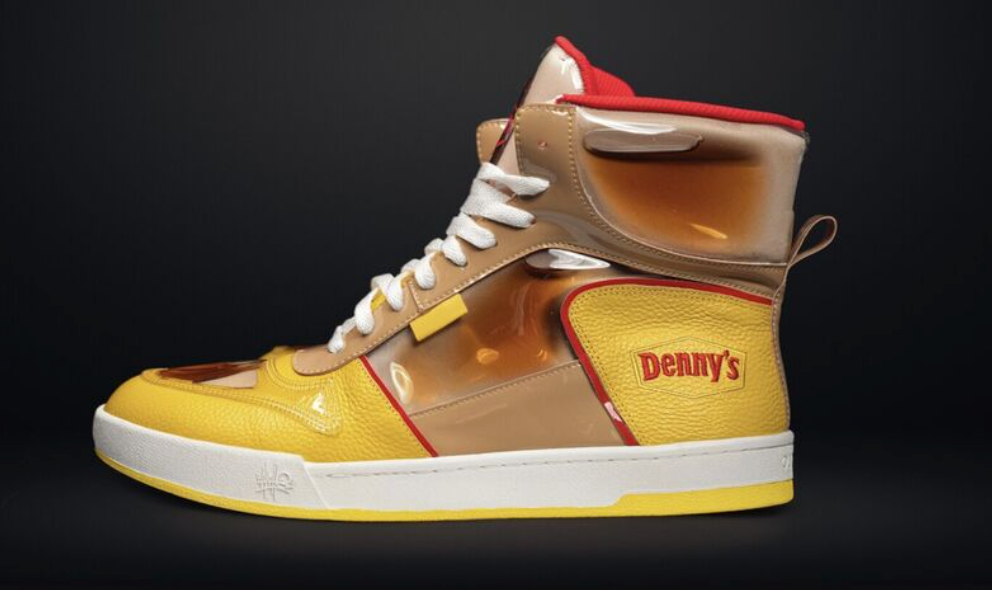
Yes. Syrup shoes exist.
Denny’s leaned all the way in with Sticky Kicks—limited-edition sneakers with real maple syrup sealed inside them. Not syrup-inspired. Not syrup-colored. Actual syrup. In the shoe.
The drop was tied to National Maple Syrup Day, sold exclusively online, and disappeared fast enough to start popping up on resale sites almost immediately.
And no, this didn’t happen because people suddenly realized they needed syrup sneakers.
It happened because people already love Denny’s.
The Merch Mania Isn’t About the Product
Let’s be honest: nobody wakes up thinking, “I need breakfast-brand footwear today.”
But what people do wake up thinking is: “I love this brand.” “I grew up with this place.” “This is hilarious.” “I want to be in on it.”
That’s the real power behind collectible drops and viral moments in branded merchandise marketing.
When you take an audience that already has emotional connection to your brand and offer them something fun, wearable, and unexpected, it creates instant momentum.
Not because it’s practical… but because it’s identity.
Why Sticky Kicks Worked So Well
Denny’s didn’t treat this like generic “promo swag.” They treated it like brand-building merchandise.
Sticky Kicks worked because it checked all the boxes of great branded merch strategy:
It was limited
Limited-edition merch creates urgency. When something feels scarce, people move faster—and talk louder.
That “get it before it’s gone” energy is a cheat code for custom brand merch drops.
It was timely
Tying the drop to a real moment (National Maple Syrup Day) gave it a built-in reason to exist.
The best event merchandise doesn’t just show up randomly. It shows up with a story.
It was exclusive
Online-only. One moment. One channel. One shot.
That kind of intentional distribution makes branded merchandise feel like a collectible, not a giveaway.
It was ridiculous in the best way
This is the part people miss.
Sticky Kicks didn’t go viral because it was subtle. It went viral because it was bold.
The humor made it shareable, the concept made it unforgettable, and the wearability made it true fashion-forward branded merch.
Great Merch Makes Customers Your Loudest Marketers
Here’s the key: when you give fans something they actually want to wear, they’ll do the representing for you.
Not because they were told to. Not because it’s required. Because they’re excited.
That’s the difference between branded merch that works and branded merch that gets left behind in a hotel room.
People don’t want “stuff.” They want a tangible way to express what they already love.
This is why custom branded apparel, limited edition drops, and creative branded items create real visibility—without feeling like advertising.
Because it’s fun, not forced.
The Lesson: Great Branded Merchandise Turns Brand Love Into Visibility
This is the part every brand should tattoo somewhere (metaphorically):
Great merch turns brand love into visibility.
You don’t need the scale of Denny’s to pull this off. You don’t need millions of followers, or a massive budget, or a national footprint.
You just need:
real brand love
a clear point of view
and high-quality branded merchandise that gives people a reason to show up and show it off
That’s how wearable branded merch becomes a growth engine.
Not louder marketing. Better belonging.
So… Syrup Sneakers: Brilliant or Bonkers? 🥞👟
Personally? I think they’re both—and that’s what makes them brilliant.
Now I want to hear from you: Are syrup sneakers a genius branded merch moment… or completely unhinged?
By Amanda Hofman, Chief Swag Officer and Branded Merchandise Expert
Happie makes plant-based wellness products designed to help people feel genuinely good in real life—no pressure, no perfection, no weird vibes.
So when it came time to create branded merchandise for trade shows and team events, we knew the merch had to feel exactly like the brand: warm, welcoming, and effortless to wear.
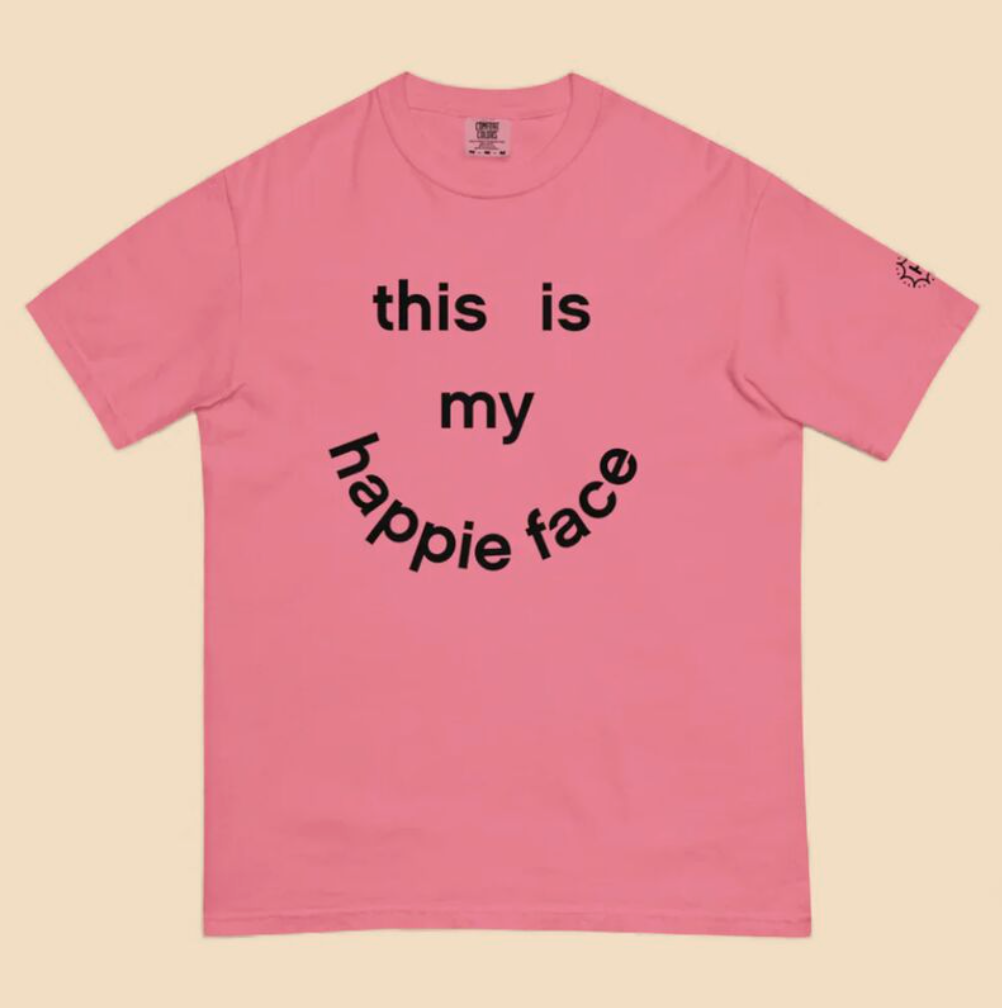
That’s how the “this is my happie face” tee was born.
Not a loud promo shirt. Not a forced logo moment. Real custom branded apparel that feels like something you’d choose to put on—even outside of an event.
The Goal: Branded Merch That Feels Like the Brand
When we design branded merch for brands like Happie, we’re not thinking about “swag.”
We’re thinking about brand experience.
Because the best branded merchandise does more than get your logo seen—it makes people feel something.
For Happie, that meant designing a tee that matched their mission: accessible wellness that fits into everyday life.
The “this is my happie face” tee was made for:
trade shows (where you want to stand out without screaming)
community events (where connection matters more than conversion)
team days (where comfort and confidence are everything)
In other words: event merchandise that actually works in the real world.
Why This Tee Works “In the Wild”
There are three reasons this design hits exactly the way it should.
😊 Friendly without being loud
This tee doesn’t shout. It smiles.
It’s approachable, easy, and creates instant warmth—without looking like a walking advertisement. It’s the kind of wearable branded merch that draws people in naturally.
🌿 It reflects Happie’s focus on accessible wellness
Everything Happie does is about feeling good in real life, in a way that’s doable and human.
This tee carries that same energy—simple, inviting, and grounded. It’s brand-aligned merchandise that supports their vibe instead of distracting from it.
🤝 It feels like a brand handshake, not a sales pitch
The best trade show merch doesn’t feel transactional.
This tee says: “Hey, welcome. You’re in the right place.” It creates connection before any conversation even starts—which is exactly what strong branded merch strategy is supposed to do.
Merch That Works Immediately… and Keeps Working
Here’s the standard we design for:
This is branded merch that works the moment it’s handed out—whether that’s at a booth, a community gathering, or a team day—and keeps working long after.
Because high-quality branded merchandise isn’t about the two-second moment someone receives it.
It’s about:
being worn again next week
showing up in selfies and grocery store runs
becoming someone’s default “comfy tee”
quietly building brand awareness over time
That’s how custom company merch becomes a true brand asset.
So… Is Your Merch Doing Its Job?
If your current branded merch is getting left behind on tables, shoved in tote bags, or “accidentally” forgotten in hotel rooms…
It’s not working.
But when your merch is wearable, aligned with your brand values, and designed with intention? It becomes something people want to keep—and that’s when branded merchandise marketing actually delivers.
So I’ll ask you the question we ask ourselves every time we design a piece:
By Amanda Hofman, Chief Swag Officer and Branded Merchandise Expert
And yes… I said what I said.
When someone tells me they’re “in promotional products,” I instantly picture the stuff that ends up in the bottom of a junk drawer two days later.
You know exactly what I mean:
t-shirt guns
flashlights
wireless charging pads
koozies
random swag that’s ordered by the thousands and handed out like candy
That’s why I hate when people assume I work in “promotional products.” 🙈😭👎
Because I don’t.
I work in branded merchandise—and that is a completely different game.
“Promotional Products” Feels Like Cheap Giveaways
To me, promotional products is synonymous with low-cost, logo’d items that are given out en masse for free—whether people actually want them or not.
It’s the stuff that gets tossed, donated, or re-gifted almost immediately. And honestly? It’s wasteful.
It’s also the fastest way for a brand to accidentally say: “We care more about slapping our logo on something than creating something people genuinely want.”
Branded Merchandise Is What People Choose to Own
Here’s what branded merch is to me:
✅ High-quality items you actually want to own ✅ Items you choose to own (not thrust upon you) ✅ Designs that reflect a brand’s values ✅ Trendy, fashion-forward pieces that feel exciting and cool
Branded merchandise should feel like something you’d buy even if the logo wasn’t there—because the design is that good.
It’s not “free stuff.” It’s brand identity you can wear, use, and flex.
Promo Items vs. Branded Merch (And Why It Matters)
Let’s call it what it is:
Promo items are the things people don’t want. They’re the cheap branded giveaways that end up as clutter.
Branded merchandise is the stuff people are banging down your door to own.
It’s the difference between:
“Here’s something free” and
“Where can I buy that?!”
And if you’re a brand trying to build loyalty, community, culture, or even just real awareness… you want the second one.
Because good branded merchandise doesn’t just advertise your brand— it creates belonging.
The Best Branded Merch Doesn’t Feel Like Marketing
Here’s the secret: when your branded merch is done right, it doesn’t feel like a walking billboard.
It feels like:
a favorite hoodie
your go-to hat
the tote you carry everywhere
the crewneck someone compliments every time you wear it
The kind of custom branded merchandise people wear because it’s cute and comfortable, not because they were guilted into it at an event.
That’s the standard. That’s the goal.
Confession Time: What’s a “Promo Item” You Want to Hate… But Actually Love?
I’ll go first:
SHORTS. 🩳
If you give me shorts? I will keep them forever. I will wear them until they have holes in them. I will become emotionally attached.
Do I want to admit it? No. Will I still do it? Absolutely.
Your Turn 👇
What’s a promo item you want to hate… but actually love?
Drop your answer—and if it’s koozies, I won’t judge you (out loud). 😅
By Amanda Hofman, Chief Swag Officer and Branded Merchandise Expert
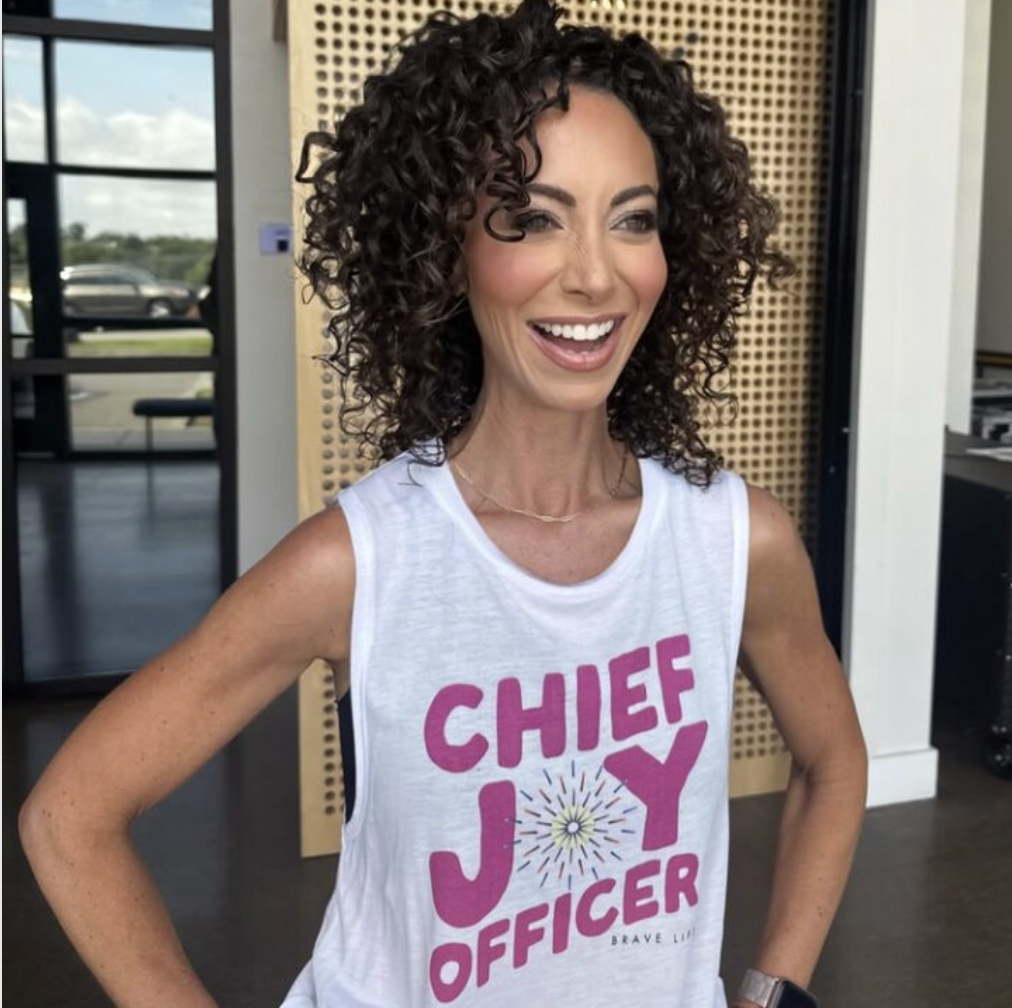
Some branded merchandise is made to promote a company. But the best custom branded merchandise is made to promote a person — or more specifically, the version of themselves they’re becoming.
That’s exactly what Allegra Cohen’s new merch drop does. It treats joy like the leadership skill it is.
She’s got that unmistakable:
🥳 joy but make it leadership 🥳 energy.
And we built merch to match it.
Welcome back to the Merch Lab — where we design company swag that doesn’t just look good, but means something.
The Vibe Check: Joy as a Leadership Strategy
Let’s be clear: Allegra’s version of joy isn’t performative.
It’s not “positive vibes only.” It’s not forced optimism. It’s not cheerleader energy.
It’s something deeper:
Joy as resilience
Joy as clarity
Joy as presence
The kind of joy you build with intention — and the kind you can carry into a room like a signal.
When a community believes in something that strongly, it deserves branded apparel that reflects it.
Why We Made This Merch (and Why It Works)
Allegra helps people show up with joyful presence — in leadership, in work, in life.
So we didn’t want to create generic promotional products with a logo slapped on.
We built something better: a uniform for that energy.
A piece that feels:
grounded
confident
unapologetic
and truly wearable
This is the difference between typical corporate swag and premium company swag designed with intention.
Because when branded merchandise is aligned with identity, it doesn’t get tossed in a drawer. It gets worn on repeat.
What Makes This Drop “Swag That Slaps” 🪩
The best merch doesn’t scream. It signals.
This drop is built like a subtle badge — the kind that makes someone feel recognized without needing to explain themselves.
✅ It’s Identity-First (Not Logo-First)
A lot of branded merchandise tries to do too much with the logo. This drop does the opposite.
The message and vibe lead. The branding supports.
That’s why it reads more like a lifestyle piece than a marketing item — which is exactly what makes branded merchandise work in the real world.
✅ It’s Designed for Real Life
This isn’t merch that only works at an event.
It’s the kind of custom branded apparel people wear:
to lead a team meeting
to run errands
to a workshop
to a coffee shop
to remind themselves they’re doing this on purpose
The best company swag fits into someone’s routine — because that’s how it creates long-term brand visibility.
✅ It Gives People a Role to Step Into
This is the real magic: The merch doesn’t just represent Allegra. It represents the community.
It’s a badge for people who choose joy on purpose — even when it’s hard.
That’s the kind of emotional connection that makes branded merchandise more powerful than almost any other marketing tool.
Steal This Move: Give Your Community a Title They’re Proud to Wear
Here’s the Merch Lab takeaway you can apply to your own brand:
Give your community a title they’re proud to step into.
People don’t want merch that just says “I attended.” They want merch that says:
“This is who I am.”
“This is how I lead.”
“This is what I believe.”
“This is what I’m building.”
When your branded merchandise reflects how someone shows up in the world, it stops being swag…
…and starts becoming identity.
What This Teaches Us About Great Branded Merchandise
Whether you’re building swag for a personal brand, a leadership community, or a company culture — this principle holds:
Merch isn’t just a giveaway. It’s a mirror.
It should reflect your people back to themselves in a way that feels true.
And when it does, you get the holy grail of company swag:
✅ repeat wear ✅ organic brand exposure ✅ community pride ✅ emotional connection ✅ merch that people actually keep
That’s what great promotional products are supposed to do.
The Bottom Line: Joy Looks Good on Leaders
Allegra’s merch drop works because it’s built around a belief — that joy isn’t fluff.
It’s leadership.
And when branded merchandise carries that kind of meaning, it doesn’t feel like marketing.
By Amanda Hofman, Chief Swag Officer and Branded Merchandise Expert
Apparently, one in four Gen Z and Millennials carry their own condiments. Condiments. In their bags.
I had to read that twice. Then three times. 🤔🤔🤔
But once the shock wore off, I realized… it actually makes perfect sense.
Some people mainline lattes. (👀 Lorelai Gilmore) Some people won’t shut up about ranch. (👀 Jim Gaffigan) Some people are ketchup people. (👀 all children everywhere)
And when a brand understands that kind of devotion? That’s when branded merchandise stops being promotional… and starts being a love language.
The Case Study: Heinz x Herschel Supply Company (Ketchup Luggage, But Make It Genius)
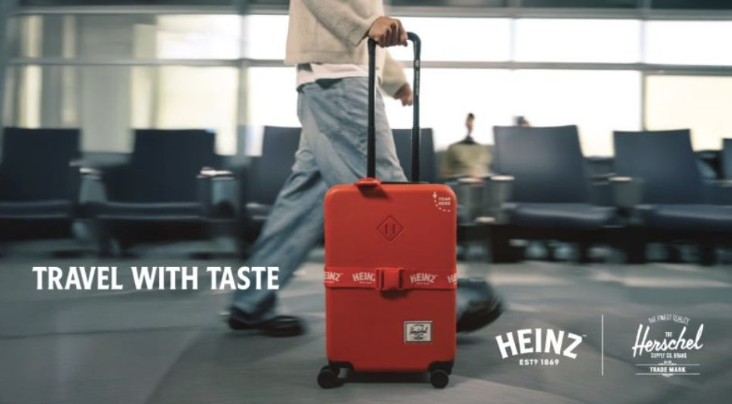
So Kraft Heinz teamed up with Herschel Supply Company and made luggage for people who love ketchup.
Read that again: ketchup luggage.
Tomato-red carry-ons
Packet-pocket liners (yes, really)
“Tear here” zipper tabs
It’s absurd. It’s delightful. I love it.
And more importantly: it’s an example of branded merch done at the highest level — where the product is so specific, so intentional, and so on-brand that it becomes a collectible.
This isn’t “swag.” This is brand world-building.
Why This Works: Branded Merchandise That’s Built for Fans, Not Impressions
Most corporate merchandise is designed to be safe.
And safe merch is usually forgettable merch.
But this Heinz drop? It’s designed for a completely different goal:
Not visibility. Identity.
When you build custom branded merchandise around real fan behavior, you’re not just asking people to notice you.
You’re giving people a way to signal something about themselves.
“I’m a ketchup person.”
“I’m loyal.”
“I’m in on the joke.”
“This is my personality now.”
And when your merch becomes a personality marker? You don’t need a billboard.
Your customers are the billboard — and they’re doing it willingly.
The Merch Lab Breakdown: 3 Reasons This Collab Hits So Hard 🔥
1) It’s hyper-specific (which makes it irresistible)
General merch blends in. Specific merch stands out.
This luggage isn’t trying to appeal to “everyone.” It’s for ketchup devotees, and that’s exactly why it works.
The more niche it feels, the more fans feel seen.
2) It turns brand elements into product features
This is the part most companies miss.
They think branding means slapping a logo on something. But premium branded merchandise does something smarter:
✅ It turns brand cues into the design language.
Heinz didn’t just put a logo on a bag. They translated their brand into details people can touch:
ketchup red
packet storage
“tear here” tabs
That’s design thinking, not promo printing.
3) It’s funny, but still functional
A joke item that’s useless becomes clutter. A joke item that’s actually useful becomes iconic.
This is luggage you can legitimately travel with — and that’s why it has real staying power.
When branded merch is both functional and fun, it gets repeat use.
The Bigger Trend: “Lifestyle Swag” Is Eating the Merch World
This is what’s happening right now:
The best brands aren’t making merch to “give away.” They’re making merch people would actually buy.
That shift matters, because it changes everything:
better quality
better design
better storytelling
better brand loyalty
and merch that lives in real life, not desk drawers