
By Amanda Hofman, Chief Swag Officer and Branded Merchandise Expert
I say this with love:
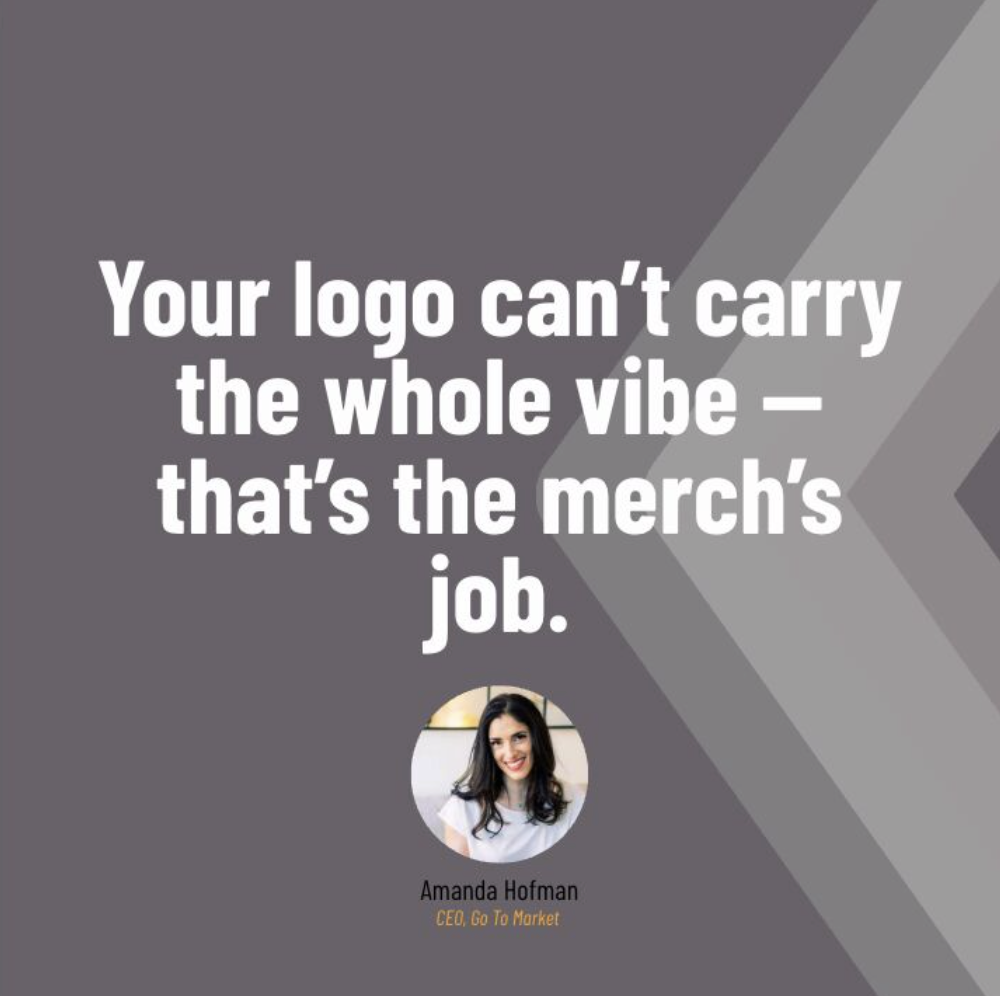
Your logo might be good… but it’s not that good.
A logo is a symbol.
It’s important — but it doesn’t carry your entire story on its own.
And when it comes to branded merchandise, this is where a lot of companies get stuck.
They assume the logo is the merch.
It’s not.
Why Logo-Only Merch Falls Flat
A logo can identify a brand, but it doesn’t automatically create desire.
Most logo-heavy company swag ends up in one of two places:
- a desk drawer
- a donation pile
Why? Because people don’t wear logos just to promote brands.
They wear things that say something about them.
If your merch doesn’t communicate a feeling, belief, or message, the logo has to do all the work — and that’s a lot to ask.
What Actually Makes Branded Merchandise Work
Merch works when it carries a message people want to wear.
Not a mission statement.
Not a tagline stuffed with buzzwords.
A real message.
When you get that right, something interesting happens:
The logo becomes a detail.
The kind of thing someone notices on:
- a cuff
- a zipper pull
- a hem tag
- the back of a hat
- an interior label
And when they spot it, the reaction isn’t “oh, that’s a logo.”
It’s:
“Yep. That tracks.”
That’s brand recognition done right.
Brand First, Logo Second
This is the mindset shift every smart merch program makes:
Identity before iconography.
Your brand identity — your voice, values, humor, and point of view — should lead.
The logo supports it.
It doesn’t shout over it.
That’s how custom branded apparel stops feeling promotional and starts feeling personal.
Why This Matters for Company Swag
When merch is logo-first, it feels like advertising.
When merch is brand-first, it feels like lifestyle.
And that difference determines whether your promotional products get:
- worn in public
- posted on social
- used repeatedly
- talked about
- remembered
Or quietly ignored.
How to Design Branded Merch People Actually Keep
1) Start with a message, not a logo
Ask:
- What do we believe?
- What do our people say?
- What phrase, idea, or vibe feels undeniably us?
Then design around that.
2) Make the logo the reward, not the headline
Put the logo where it feels intentional:
- subtle embroidery
- tone-on-tone print
- interior details
- unexpected placements
This is what turns corporate swag into something people actually like wearing.
3) Choose merch people want even without branding
If the item wouldn’t be appealing without a logo, it won’t be appealing with one.
Quality, fit, and design matter just as much as branding.
The Desk Test: Keeper or Clutter?
Quick question:
What’s the nearest logo’d object on your desk right now?
Is it:
- something you use every day?
- something you like having around?
Or is it:
- clutter you just haven’t thrown out yet?
That answer tells you everything about whether the merch worked.
The Takeaway: Logos Don’t Make Merch Memorable
Logos help people recognize brands.
Messages help people connect with them.
The best branded merchandise understands the difference.
Brand first. Logo second.
Always.